

The email read: The World of Syrah with Luigi. How could I resist?
Syrah wines tend to be rich and powerful, sometimes even described as being meaty. While it has its roots in the Rhône Valley of France, where many believe the French version to be the ideal, Syrah has found a new home and identity as Shiraz in Australia, where it is now the most planted grape.
France and Australia are the two dominant growers of Syrah, but also in the pack are Spain, Argentina, South Africa, the United States, Italy, Chile, Portugal, and a few lesser players, including British Columbia, where it has carved out a place for itself, ranking fifth among planted grapes at close to 10%.
The use of the terms Syrah and Shiraz can indicate a difference in style based on climate and winemaking approach. Syrah tends to come from cooler regions, resulting in elegant wines with high acidity and tannins, dark fruit, black pepper, and violet notes. In contrast, Shiraz often denotes a wine that is riper, richer, fruitier, and bolder, with higher alcohol and flavour profiles of dark chocolate and blackberry.
France
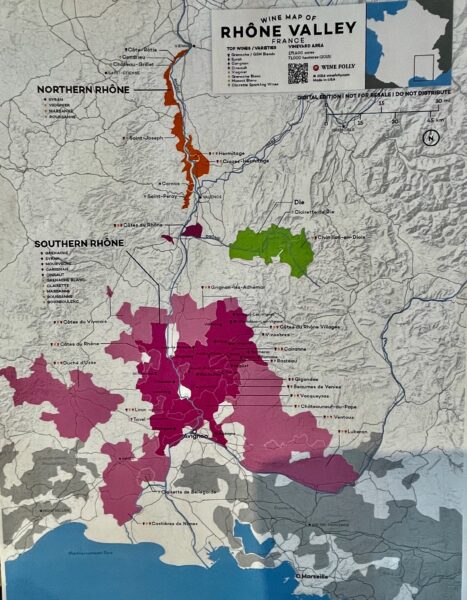
The Rhône Valley is the home of Syrah. The valley stretches 240 kilometres north to south in south-central France, beginning near Lyon in the north and emptying into the Mediterranean Sea in the south. The region is divided into two sub-regions: the Northern Rhône, which is about 64 kilometres long, and the Southern Rhône, where Syrah is usually used in blends with Grenache, Mourvèdre, and, to a lesser extent, any of the other 23 varieties sanctioned for the region.
Well-known northern appellations include Côte-Rôtie, Cornas, St.-Joseph, Crozes-Hermitage, and Hermitage. The wines here are deep and dark, medium- to full-bodied, and exhibit earthy, dark fruit flavours, high tannins, and black pepper notes. This is home to some of the best and most expensive Rhône wines, where the best vineyards cling to steep, south-facing slopes. In Côte-Rôtie, small additions of Viognier (up to 20%) are allowed to add lift and aromatics.
The Southern Rhône is warmer, broader, and known for blends. Syrah plays a supporting role alongside Grenache, Mourvèdre, and several of the other varieties permitted in the region. Well-known appellations include Châteauneuf-du-Pape and Gigondas.
Australia
The wines here are big and powerful, often achieving alcohol levels of 14–15% ABV while being balanced with ample fruit and tannins. The warm and dry climate produces big, ripe, and robust wines. Prominent regions include Barossa Valley, McLaren Vale, and Eden Valley. Other regions producing wines with slightly different styles include the Clare Valley in South Australia and Heathcote and Grampians in Victoria, as well as Riverland.
The most famous Australian Shiraz is Penfolds Grange (also known as Grange Hermitage). Many vines here are 100 years old, and some regions have remained phylloxera-free, including South Australia, Western Australia, and Tasmania. In Australia, Shiraz is often blended with Cabernet Sauvignon.
Chile
Chile continues to raise its profile with Syrah, especially in cooler coastal and high-altitude areas where producers are still refining the country’s signature style. It’s a region worth watching.
What to Expect from a Syrah
Colour: Characteristic deep purple rim.
Classic aromas and flavours include: blueberry, plum, bramble, cocoa, tobacco leaf, and black pepper. You can also expect to find any number of the following typical characteristics: blackberry, raspberry, licorice, dried herbs, black tea, black currant, black olive, raisin, dark chocolate, sweet baking spices, lavender, coconut, game, leather, pencil shavings, and vanilla, among others.
Aging: The best examples can age for 5–25+ years.
Good food pairings include lamb, steak, game, veal, and pork.
The Tasting
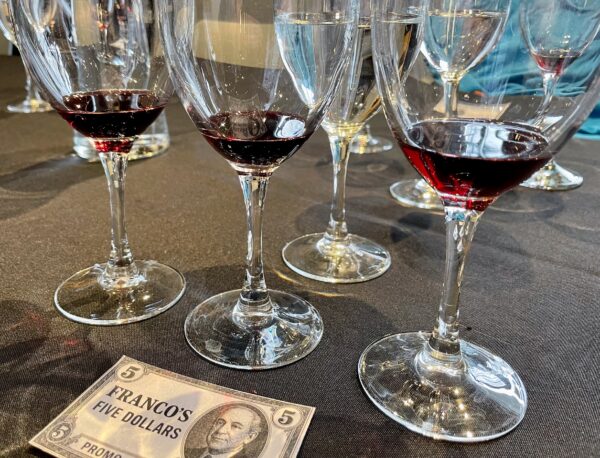
At Franco’s Liquor Store, we tasted three Syrah wines from three countries: Italy, Australia, and France. All three were from family-run wineries.
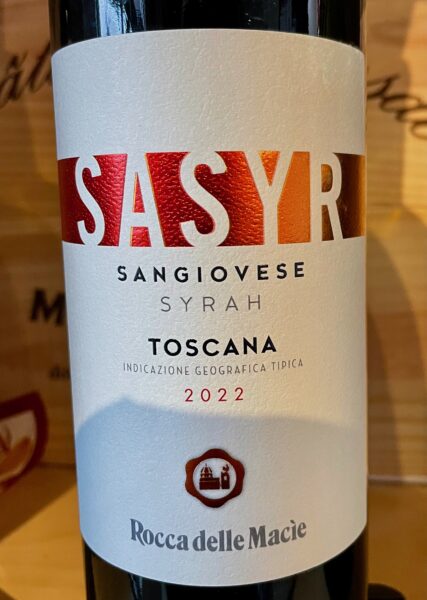
2022 Sasyr – Rocca della Macie ($22.99)
The first was a reasonably priced Italian wine from a Tuscan house well-known for Chianti Classico wines. To be fair, this was a blend of 60% Sangiovese and 40% Syrah from Tuscany, grown at higher elevations. At 13% ABV, it’s what you’d expect from a versatile Italian dinner wine. Garnet red. Lots of red fruit on the nose, especially red cherry and raspberry. Good balance with medium body. Spice, tobacco, and chocolate join the fruit on the palate. Pairs well with roasted meats, pasta, hard cheeses, lasagna, and meat lovers’ pizza.
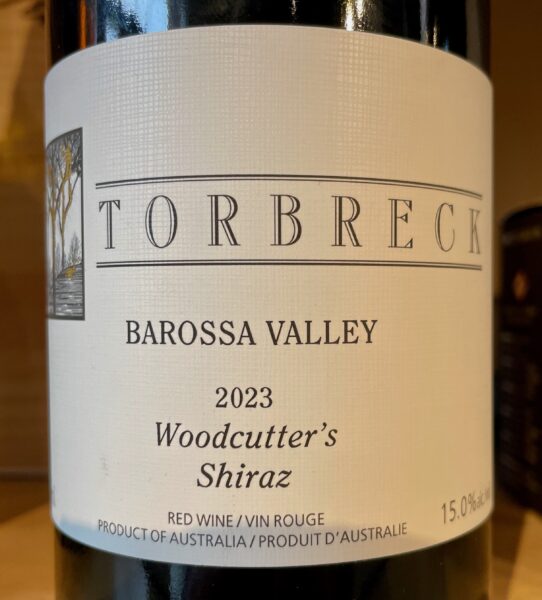
2023 The Woodcutters Shiraz – Torbreck ($41.99)
Made from 150-year-old vines untouched by phylloxera, this wine leans more toward a Rhône-inspired style than many Australian counterparts. Age-worthy yet very approachable now, it delivers layers of blueberry, plum, blackberry, currant, cherry, baking spice, black pepper, earthy notes, and a touch of chocolate. Full-bodied, well-balanced, and long on the finish. Ideal with roasts, hearty stews, or mushroom dishes.

2021 Crozes-Hermitage – Northern Rhône Valley ($85.99)
Last up was a wine from the northern Rhône Valley. Ripe blackberry, mulberry, cherry, lots of dark berries, black pepper, black olive, and sweet spice. Very good balance, full-bodied. Yummy, juicy, almost jammy fruit with a fruity finish. Made using whole-cluster pressing and sitting at 13.5% ABV, it’s a strong match for flank steak, lamb, game, beef bourguignon, or charcuterie.
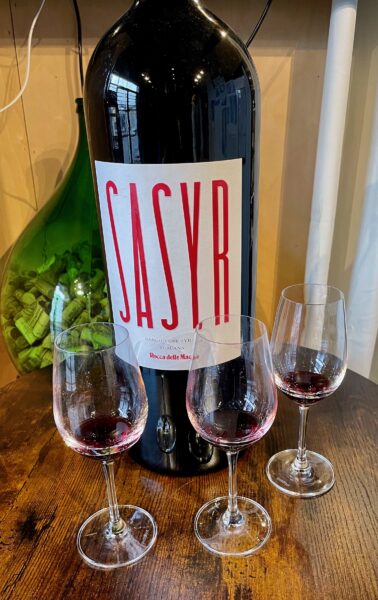
Also on display was an impressive five-litre bottle of Sasyr for $165.99, perfect for parties or any large gathering.
(All photos – Sam Hauck)
