

Vilnius, Warsaw, Vienna: ArtVilnius’26 Puts Three
European Art Scenes in Spotlight
The Baltic region’s largest contemporary art fair returns to Vilnius with 70 galleries from
more than 20 countries, including Vienna’s Christine König Galerie
and Galerie Sturm & Schober.
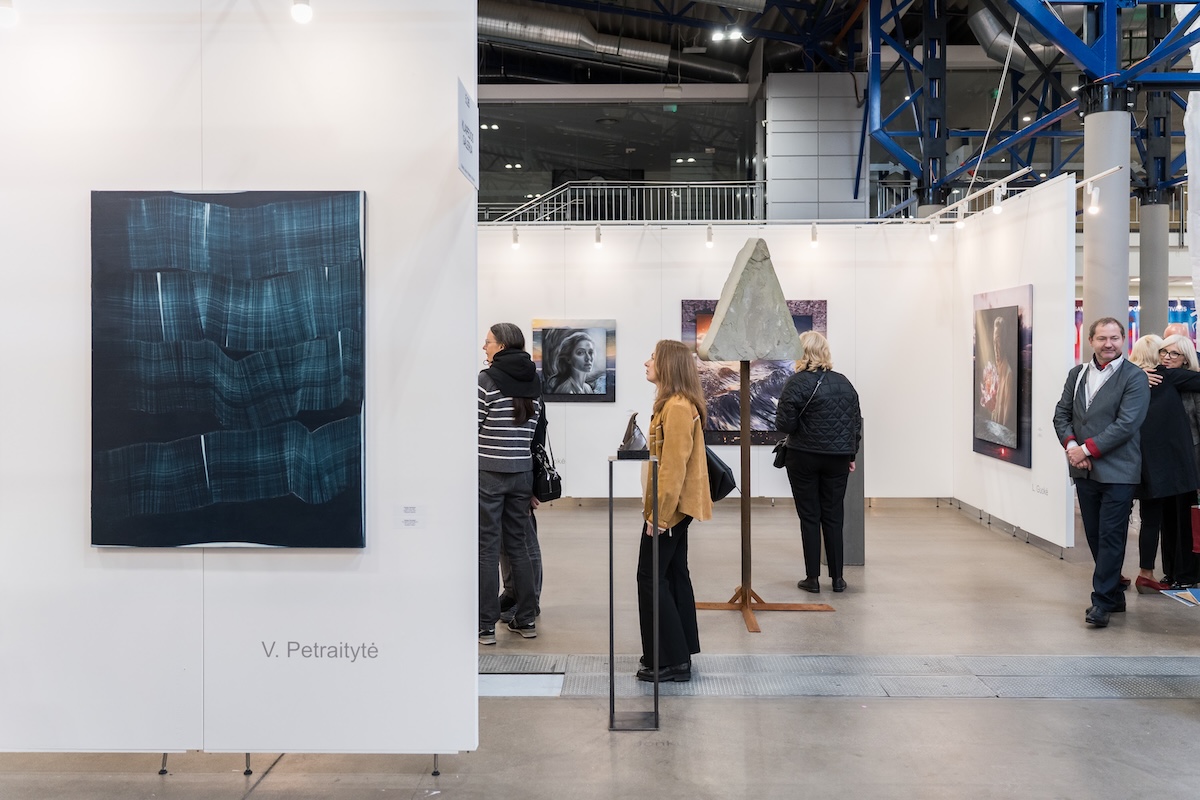
On 1–4 October, Vilnius will become a meeting point for the contemporary art scenes of Europe as the 17th edition of ArtVilnius’26 will bring together 70 galleries from more than 20 countries. The renowned Vienna-based Christine König Galerie and Galerie Sturm & Schober are among the participants in the region’s oldest and largest contemporary art fair.
Held at the Lithuanian Exhibition and Congress Centre Litexpo, ArtVilnius’26 main exhibition will explore the historical connections, contemporary art scenes and current creative directions of three major European capitals: Vilnius, Warsaw, and Vienna. Through exhibitions, curated projects and discussions, the program will highlight both shared experiences and distinct artistic perspectives shaping the region today.
“Looking at Vilnius alongside Warsaw and Vienna allows us to step outside the familiar boundaries of our region. It reveals unexpected connections and differences, and gives us a chance to see ourselves and our neighbours from a different perspective,” says Neringa Bumblienė, Artistic Director and Curator of the Vilnius Performance Art Biennial.
One of the central exhibitions of ArtVilnius’26 is The Path, the fair’s annual curated competition, bringing together selected artists from Lithuania and abroad. Moving from monumental sculptures to unexpected installations and live performances, the exhibition turns the fair into a space for experimentation, new artistic forms and a direct dialogue between the works and their audience.
For the first time, it is curated by Aliaksei Barysionak, a Vienna-based artist, curator and writer. Through an open call, he selected 11 artists from Lithuania, Latvia, Estonia, Belgium, Belarus and Ukraine, whose works reflect on a world marked by war, forced migration, ecological threats and fragility.
“I was surprised by how fragile, subtle and even gentle the exhibition became. The artists work with everyday, industrial and infrastructural materials, yet they speak about very deep and painful things. The path takes us through poisonous forests, border spaces, places of mourning and abandoned industrial sites. We walk through it thinking about how to survive dark times, while the works along the way help us find our bearings,” says Barysionak.
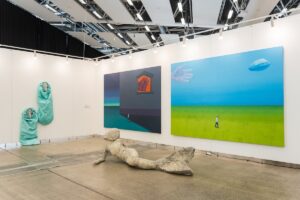
The Path exhibition features Estonian-UK artist Bob Bicknell-Knight, whose 1.3-meter-high sculpture Deposit brings his interest in digital and physical worlds into three-dimensional form. Lithuanian-Norwegian artist Kasparas Brazovskis will present the site-specific installation Fences vs. Bulldozer Tactics that plays with the language of barriers, construction and urban space. Vytautas Viržbickas, a sculptor from Lithuanian will contribute Džiaugsmai (Joys in English), a monumental five-meter-wide sculpture built from black pipe fittings once intended for a Russian water-treatment business.
Vienna’s Christine König Galerie will bring works by Magda Csutak and Erwin Kneihsl, among others. Csutak’s Quasi Meteorit, an artwork combining wood, porcelain, iron, silicon dioxide and nickel oxide, and Kneihsl’s Ohne Titel (Sonne 58), a silver gelatin photograph and collage. The selection reflects the gallery’s focus on politics and activism, feminism, literature and post-conceptual art practices.
Another Viennese participant Galerie Sturm & Schober will present works by artists including Swiss painter Dave Bopp, whose mixed-media Conjunction After Sunset combines layered abstract forms and shifting colours.
Feature image: ArtVilnius © Andrej Vasilenko
