
In Conversation With Ky Sargeant with comments by Mily Mumford
Trans Girls: Raw & Uncut
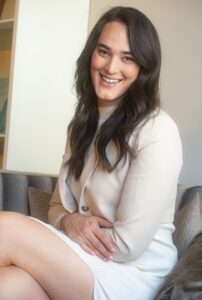
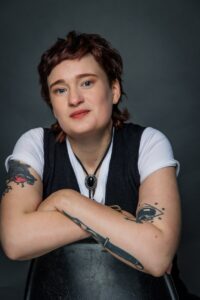
First question, why do you want to make a documentary about Trans Girls?
I first conceptualized the idea over a year ago because the growth of our all trans femme comedy show had been faster and crazier than I could’ve possibly dreamed. I knew pretty immediately that we had a really unique story to tell, and I quickly went looking for a director/producer interested in helping me make it. There’s definitely nowhere else in Canada, and I’d even go so far to say nowhere else in North America that has built such a grass roots community movement in standup comedy, specifically dedicated to trans women, in the way that we had.
How did you come up with the ideas/script for the documentary?
From the start I knew that the comedy itself should only really be a small part of the documentary and I looked for partners who would get that. The reality is that the girls involved in our community have lives that are far more interesting off the stage. The ideas and the directions for the film have really come from them, and trying to understand the journeys they each navigate individually, and how those stories ultimately manifest on stage.
What were the first steps you took to turn your idea into reality?
The first step was finding a director haha, and I’m so grateful to have partnered with Mily Mumford on this. I was at the Vancouver Queer Film Festival back in 2024 and was inspired by the possibility of filmmaking. So when I eventually got connected to some of the folks who run it, it was a very easy step to just start asking around and pitching the idea of the documentary to various folks. Once I met Mily and they got behind the concept, it then became a very collaborative approach of figuring out who we wanted to include, getting funding, and how the story should unfold.
How does your background in stand-up comedy influence your approach to producing a documentary?
It’s been really interesting because the reality is that I’m not “producing” the documentary. My producer, Erin Purghart, (who does also happen to be a comedian) is the one handling all the day to day production work and does a fantastic job, because they already have experience producing award winning short films.
For me, it’s actually been an extremely wild adjustment to go from working as just one person, to being part of the entire machine that is needed to make a film. For example, if I want to produce my show, I can pull off everything almost entirely myself in about a month. I do the marketing, I organize the venue, I organize the girls, I set up cameras, I set up sound, I host, I perform, and when the show is over, I can neatly wrap everything up.
With film, we’ve been in pre-production for nearly a year, taping is going to take nearly 2 weeks, and then editing another few months, and then marketing many more months after that.
I think where my background in comedy and my work in activism/non-profit really helps is in the community building aspect of it. The truth is that most of the real “filmmaking” work is being done by people much more talented than me. My job is to build the community and create the world that they were inspired to document.
What was the biggest challenge in translating the timing and rhythm of a live stand-up set into a film?
We haven’t gotten into the editing room yet, but something Mily and I have talked about is that the documentary is not a comedy special. People shouldn’t expect to sit and watch an hour and a half of standup. They should expect to watch a documentary that will occasionally have stand-up in it when it makes sense to the story. The best example I can give of this is Paris is Burning, a classic queer art film. The performance is mixed into the story, rather than being two separate parts of it.
How will you strike a balance between sharing your personal story and making an entertaining, accessible film?
Mily and I were very clear really early that we are making a story that is first and foremost for other queer people. With that, we are making a very intentional choice not to explain or “educate” folks, and trust that folks who choose to watch the film have the motivation and the intelligence themselves to meet us where we’re at.
Obviously, we are not trying to specifically exclude anyone from watching the film or create something that non-trans folks can’t understand, but I think the idea that our personal trans stories can’t be accessible because we are trans feels ridiculous. We are navigating human experience and human emotions, just like everyone else. I think that anyone who can be in touch with that shared humanity within themselves will have a great time with the film.
How do you show the struggles of the trans experience while also highlighting the joy and resilience of the community?
I think this tension has effectively defined all of my community and arts work. I have always strongly believed in working with a positive focus on trans experience. In my opinion, most queer people are pretty well aware of struggles we go through, because we are going through them.
So for us on the film team, it’s not about ignoring the struggles, it’s about focusing on how you’re actively working to overcome them. If people are coming to watch a comedy documentary to be educated on the political climate of the world I think that’s something they’ve gotta figure out on their own haha.
What are the common stereotypes about trans women in film that you are actively trying to challenge with this project?
All of them.
As a trans creator working behind the camera, do you feel the industry is becoming more accommodating to authentic, lived-experience storytelling?
I’m not behind the camera so here’s what Mily says!
Mily Mumford, the Director:
As a trans creator writing and directing queer and trans led films both in the doc and narrative film spaces, I am passionate about advocating for us telling our own stories, and I am excited to see more and more queer and trans creators fighting for the same. However, the industry as a whole has taken a backslide over the last few years, especially in terms of commercial and studio film. The 2025 GLAAD “Where We Are in Film” study that was just published showed a drop in LGBTQ-inclusive films for a third year in a row, with only 20.4% of films from 10 major film distributors containing LGBTQ+ characters and ZERO trans characters counted across all major studio films. Now it’s more important than ever to support queer and trans led films in front of and behind the camera so we can continue telling our stories and hopefully start to gain the same levels of recognition as our straight/cis counterparts.
What’s one lesson do you wish you had learned earlier in your project?
Don’t launch your crowdfunding campaign in the middle of when you’re filming a documentary.
Who or what has been your biggest source of support?
My director and my producer Mily & Erin are the only people giving me any confidence that this is a real thing that we actually have the capacity to do. My partner Ivy, and best friends are people keeping me sane while we do it.
What do you hope audiences take away from your film?
That community building is not an abstract thing. Literally anyone can do it. If you see a need in your community or a group going unserved, start serving them and keep going. If you have ever said “Oh I wish there was a place where….” I can bet you that you’re not the only one thinking about it. It only takes one person to start, but it does take one person to start.
What reactions do you think trans audiences may feel when watching it?
We hope they laugh. They can cry too, but hopefully they cry because they are laughing so hard.
Tell us something about yourself what you lean into when you feel anxious or worried.
I have a really deep meditation and spiritual practice that is pretty much compulsory to keep me sane and grounded through stressful times. I’m getting better at also leaning on my friends and allowing myself to tune out and just enjoy myself at community events, which is actually a really difficult thing to do when you are someone who works to make community events.
Going forward how will you define yourself and your documentary if it is successful?
Probably the same as I always have. Just a girl tryna do her part with the skills and the resources she has to make the world a little bit better.
TELEFILM
Canada
About Trans Girls: Raw & Uncut
Trans Girls: Raw & Uncut | The Movie, is a feature-length documentary about an all-trans women comedy show that has become one of the most successful stand-up shows in Vancouver. Hot—Heartfelt—Hilarious, the documentary features seven comedians performing raw stand up routines, giving up close and personal interviews, and unfiltered behind-the-scenes storytelling.
Ky Sargeant (she/they) | Executive Producer, Founder of Trans Girls: Raw & Uncut
Ky Sargeant, also known on stage as Kay, is the founder of Transgirls: Raw and Uncut and has solo-produced the show for the last 3 years, in addition to hosting an open-mic where she’s developed all the talent she needs for the show. She grew up in Singapore, before coming to Canada for university, and beginning her career as an organizational culture consultant. She found her way into stand-up and film after feeling jaded about the actual impact her work had. Outside of the show, she is highly active in the 2SLGBTQIA+ community both in grassroots activism and serving as the board vice chair of a major BC Charity. Her life is a constant juggle between the different masks she has to wear, whether it’s advocating to the provincial government, leading a protest, or performing to hundreds on stage.
Mily Mumford (they/them) | Director
Mily Mumford is a writer/director/producer and scientist focusing on film, immersive theatre and new media. They have had over twenty works as a writer/director produced for the stage, and have written and directed several award winning shorts and music videos. They are an alumnus of the Warner Brother’s Canada Access Writer’s Program (2022), the Women in the Director’s Chair Career Advancement Module (2023), the Gender Equity in Media’s Genre Lab (2024), and TIFF’s Series Accelerator (2024). They were recently a part of the inaugural Disabled Producer’s Lab (2025) with the National Screen Institute and Disabled Screen Office. In addition to creative work they have a BSc. in neuroscience and an MSc. in Interactive Technology and their scientific work greatly informs their creative work and vice versa.
The minds behind the wildly popular Trans Girls: Raw & Uncut are launching a crowdfunding campaign to support the upcoming feature-length documentary about the all-trans women show.
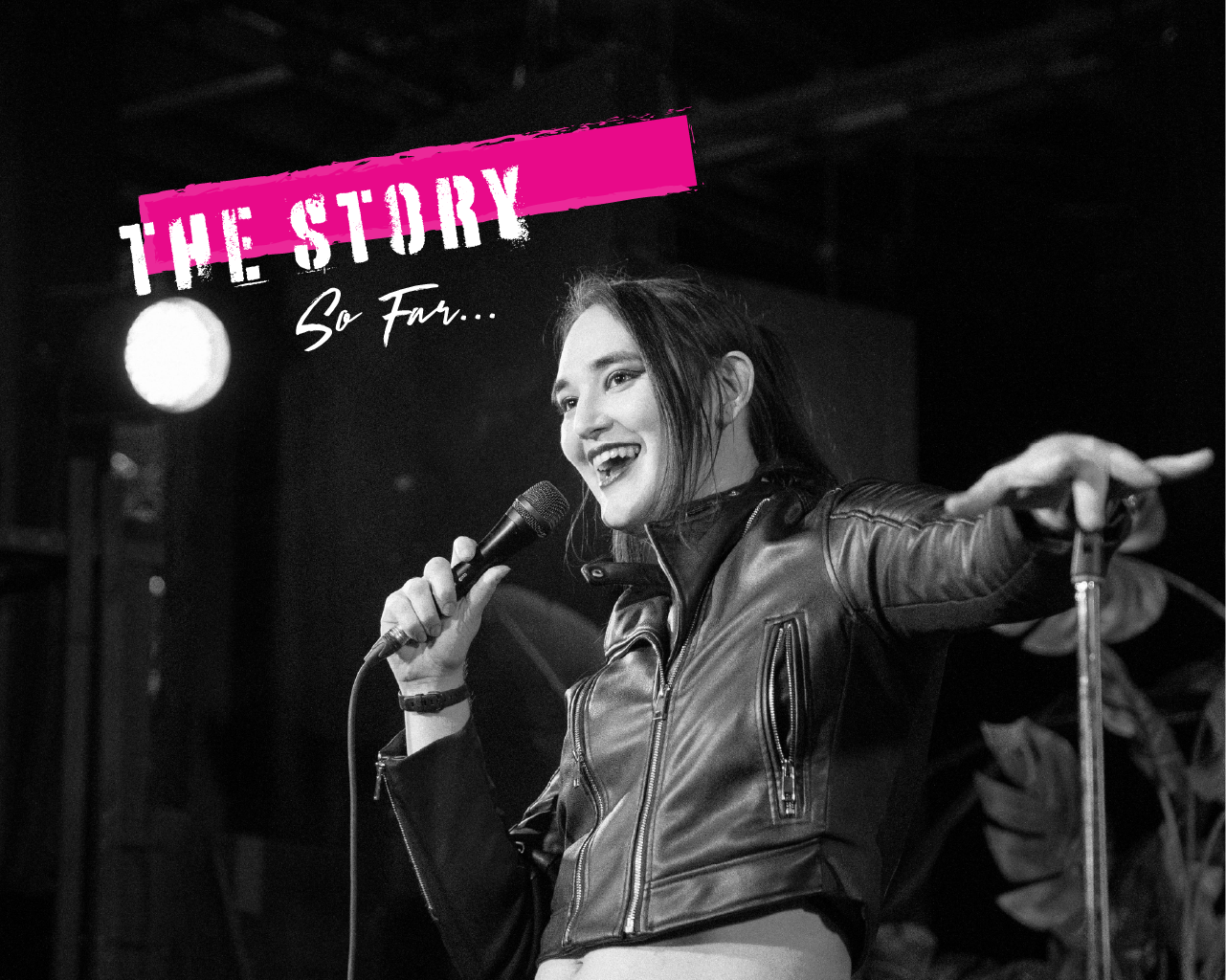
Feature image: Ky Sargeant Photo Credit: Claire Kellam – @jk44
