
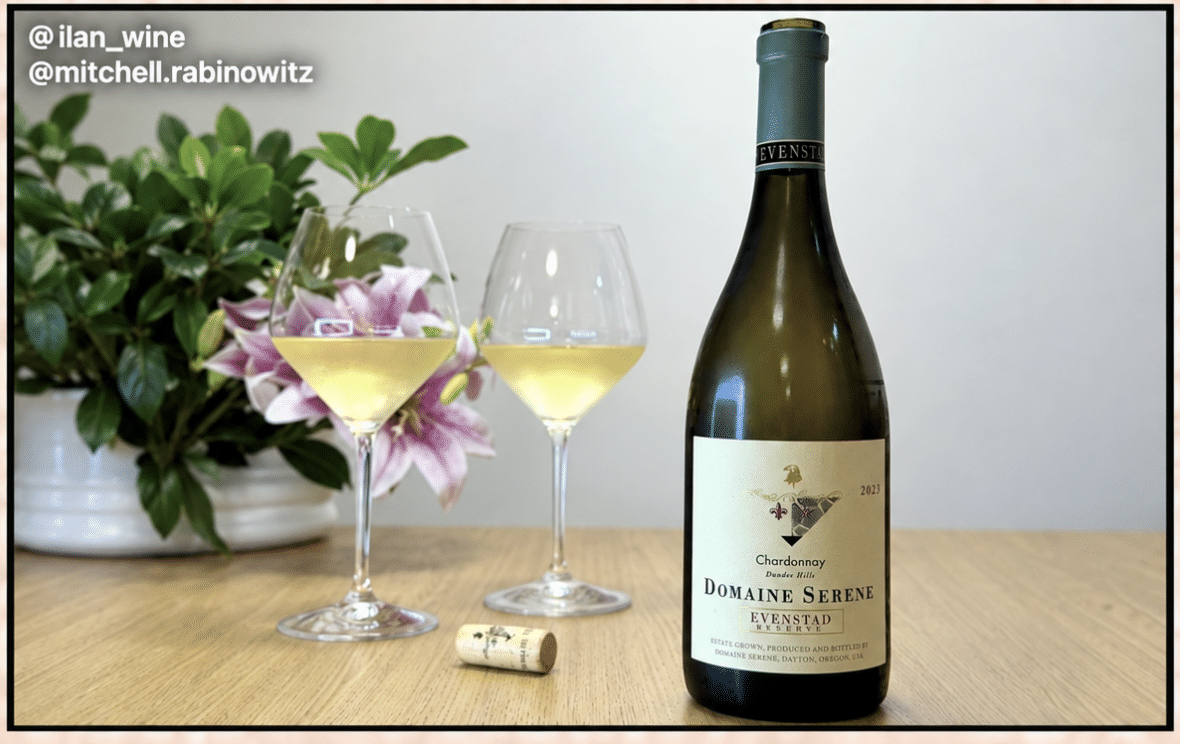

Domaine Serene Evenstad Reserve Chardonnay 2023
Grace and Ken Evenstad arrived in Oregon’s Willamette Valley in 1989, when the region’s reputation rested largely on Pinot Noir and Chardonnay remained a secondary concern for many growers. They named Domaine Serene for their daughter, Serene, and later named their first vineyard for their son, Mark Bradford Evenstad. Their interest in the wines of Burgundy led them to the Dundee Hills, where they purchased forty-two recently logged acres on high ground west of the Willamette River. The first Domaine Serene wine was made in 1990, and the first vineyard was planted three years later after the family cleared stumps and basalt boulders from the property. Some experienced Oregon growers warned them that grapes would struggle to ripen above 600 feet and on western slopes, but the Evenstads continued planting. The estate expanded across the hill, and a five-level winery designed to move grapes and wine by gravity opened for the 2001 harvest. A separate winery devoted to Chardonnay and sparkling wine followed in 2018.
Domaine Serene began making Chardonnay with the 1997 vintage, using fruit from Côte Sud, a south-facing vineyard containing Dijon clones. A clone is a selected form of a grape variety propagated because it has particular growing or flavor characteristics. The Dijon clones brought to Oregon were chosen in part for their ability to ripen in cool conditions while retaining acidity. Over time, the winery planted more Chardonnay at Côte Sud, Etoile, Clos de Lune, and Triple Crown, the last of which was developed primarily for the variety. The Evenstad Reserve is assembled by tasting individual barrels from these estate vineyards and choosing those that work together. It is therefore neither a single-vineyard wine nor a general regional blend assembled from purchased grapes. It is an estate selection intended to combine the differences among several Dundee Hills sites.
The Dundee Hills rise from the western side of the Willamette Valley, approximately twenty-eight miles southwest of Portland and about forty miles inland from the Pacific Ocean. The Coast Range reduces the force of the ocean’s rain and wind, though the area retains a maritime climate marked by wet winters, comparatively dry summers, and cool nights during the growing season. Pinot Noir established the region’s reputation, beginning with the first vineyard plantings in 1966, but Chardonnay responds to the same long season and difference between daytime and nighttime temperatures. Moderate afternoon warmth allows the grapes to develop peach, pear, and melon flavors. Cooler nights slow the loss of malic acid, the sharp natural acid also found in green apples. This permits ripe fruit and refreshing acidity to remain together in the finished wine.
Beneath the vines lies the red Jory soil closely associated with the Dundee Hills. It developed through the weathering of ancient basalt and generally consists of iron-rich clay, silt, and loam. In many places it extends four to six feet before reaching less weathered rock. Jory drains well enough to prevent roots from remaining waterlogged during Oregon’s rainy months, yet its clay holds useful moisture after the summer turns dry. Because Domaine Serene’s vineyards are dry-farmed, without routine irrigation, that retained winter moisture helps sustain the vines through ripening. The soil does not place a literal taste of stone or iron into the grapes. Its influence is indirect: drainage, stored water, root depth, vine growth, and the rate at which the fruit ripens all affect acidity, berry composition, and flavor.
The 2023 growing season began slowly, with cool conditions delaying early vine development. Warm weather followed, and summer became both warmer and drier than usual. A pronounced heat episode arrived in August while the grapes were changing color and beginning their final stage of ripening. Disease pressure remained low, yields were somewhat smaller than average, and maturation accelerated, producing an early and compressed harvest across much of the Willamette Valley. Domaine Serene harvested the components for this Chardonnay from the middle of September through the beginning of October. The warm, dry season encouraged ripe peach, nectarine, and melon flavors, while the high vineyards, cool nights, and selection of picking dates preserved enough acidity to keep that ripeness from feeling heavy.
The 2023 Evenstad Reserve is 100 percent Chardonnay from the Dundee Hills, with 13.9 percent alcohol. It spent thirteen months in French oak, 27 percent of it new. New barrels contribute more obvious toast, vanilla, and sweet spice, while previously used barrels allow slow oxygen exchange with much less fresh wood flavor. Restricting new oak to a little more than one quarter of the barrels gives the wine breadth and a mild toasted character without covering the fruit. Time in barrel also softens the wine’s texture and integrates the acidity. The finished blend was bottled in December 2024, more than a year after harvest, allowing the separate vineyard lots and barrels to come together before release.
In the glass, the wine is a clear medium gold with a faint green cast at the rim. The aroma begins with ripe yellow peach, nectarine, pear, and honeydew melon, followed by lemon curd, honeysuckle, lightly salted butter, vanilla, and restrained toasted oak. The fruit has the ripeness expected from the warm 2023 summer, though it does not move into tropical excess. The palate is broad and smooth, with peach and melon as its principal flavors and firmer citrus becoming more apparent on the mid-palate. Barrel aging gives it a creamy feel, but the acidity remains clearly perceptible alongside the ripe fruit. A mild savory note, together with the impression of salt and lemon, reduces the sweetness suggested by the aromas.
The finish is long and gently warming, carrying nectarine, citrus peel, toast, and a small amount of vanilla after the fuller fruit has receded. The 13.9 percent alcohol adds weight, while the acidity keeps the finish fresh and prevents it from ending softly. The generous stone fruit and melon reflect the warm and dry vintage, while the Dundee Hills’ cool nights helped the grapes retain acidity. The deep Jory soils held moisture through the dry summer and helped the vines ripen without the sudden interruption that severe water stress can cause. High-elevation estate vineyards contributed fruit harvested at different moments, and blending those lots allowed the winery to place riper components beside firmer ones. French oak then added toast, creaminess, and spice without becoming the principal flavor.
This is a young Chardonnay, and it benefits from some air. I would serve it at approximately 52 to 55 degrees Fahrenheit rather than directly from a cold refrigerator. Excessive chilling suppresses the peach, honeysuckle, butter, and toasted notes and makes the acidity appear more severe. Twenty to thirty minutes in a decanter, or simply allowing the bottle to remain open while the first glass is consumed, brings greater integration between its fruit and oak. A broad white-wine glass gives the aromas room to develop. The wine is already enjoyable, particularly for someone who likes ripe fruit and polished barrel texture, but it should become more harmonious over the next two or three years. Properly stored bottles should drink well through approximately 2032, gradually exchanging their fresh peach and honeysuckle for baked apple, hazelnut, pastry, and more pronounced savory flavors.
At the table, the wine has enough body for roast chicken, lobster, scallops, salmon, halibut, or pork with a cream-based sauce. Its acidity can clear butter and cream from the palate, while the toasted and lightly nutty barrel flavors fit browned butter, roasted poultry skin, mushrooms, and toasted almonds. Lobster with lemon butter would be particularly suitable: the wine’s ripe fruit has sufficient intensity for the lobster’s sweetness, its creamy texture matches the richness of the butter, and its citrus acidity keeps the combination from becoming tiring. This wine comes from a warm Oregon year, several estate vineyards planted on volcanic hillsides, and a cellar willing to use oak while keeping it in proportion. The result is a generous Dundee Hills Chardonnay whose peach and melon belong to the 2023 season, while its acidity and measured use of French oak allow those ripe flavors to remain controlled and persistent.
Mitchell Rabinowitz
I’m a retired university professor with a Ph.D. in cognitive and developmental psychology. I taught cognition and education starting in 1984. In retirement I decided to take wine seriously, and I’ve been using AI to help me learn faster and create better. I’ve also learned you can’t just ask AI one question and call it done.
For me, an essay usually takes a number of iterations. I create a draft, then I check accuracy, hunt for gaps, revise the structure, and do it again until the piece feels coherent and useful. I also use other AIs as collaborators. It is an extensive process creating the essays.
I try to create these as stories because that is the format that sticks for most of us. Facts land better when they have a sequence and a few turning points. Connect with @mitchell.rabinowitz on Instagram