
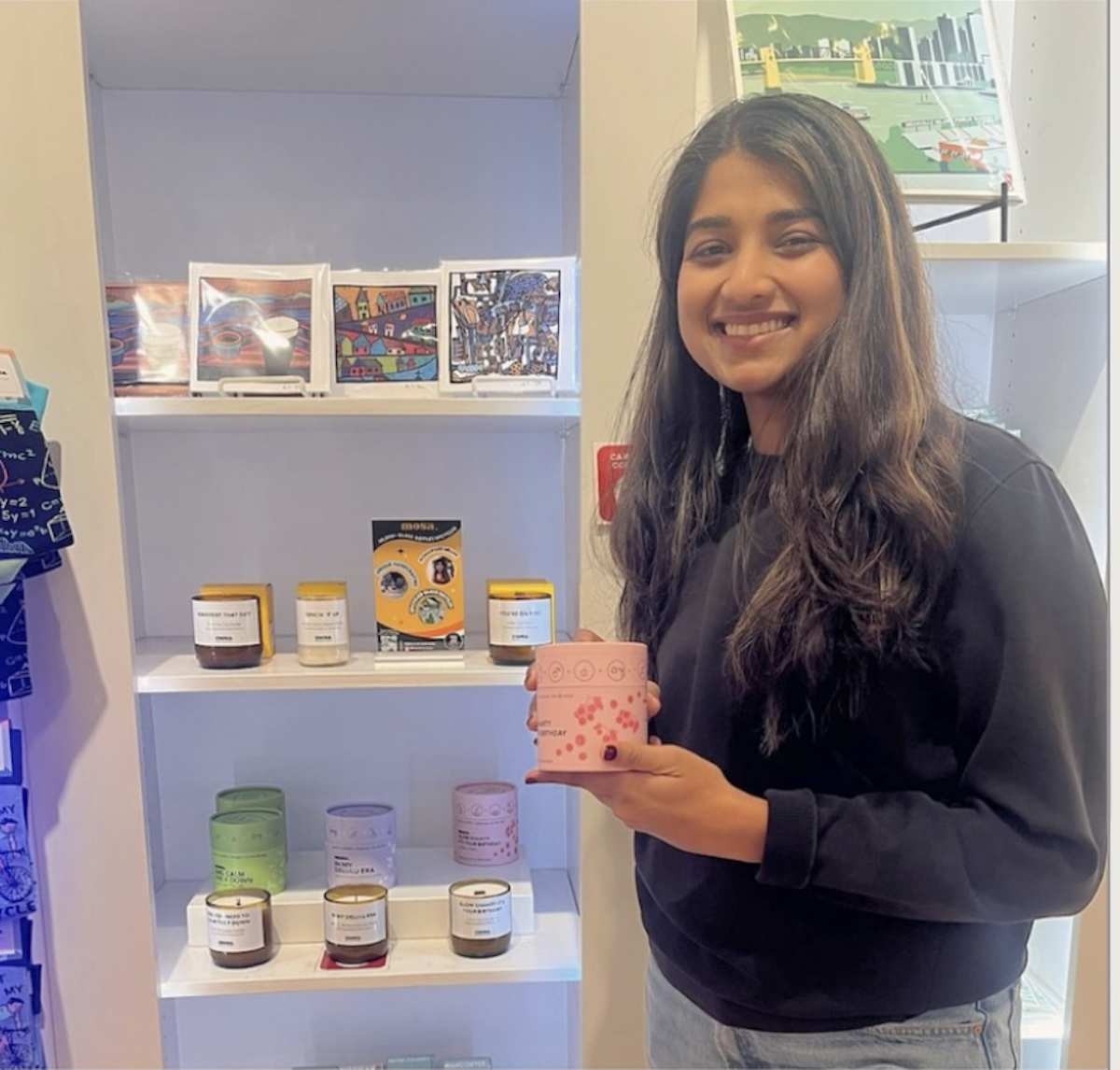
In Conversation with Prishita Agarwal,
Co-Founder of Mosa Technologies
and Veuve Clicquot Bold Woman Awards nominee.
In Canada’s 10th edition of the international awards program, the Veuve Clicquot Bold Woman Awards named Prishita Agarwal as one of its top finalists in the Bold Woman and Bold Future Award categories.
- Can you share a bit about your background and what inspired you to start your business?
I grew up in a small town in India where sustainable living wasn’t a trend, it was just how people lived. Reusing bags, making things from scrap, finding a second life for everything. It was intuitive. So when I moved to Canada to study at UBC, seeing glass bottles thrown into landfills genuinely bothered me. Not in an abstract way, but in a “I have to do something about this” way. That instinct is where Mosa started.
- Was there a defining moment when you knew you wanted to become an entrepreneur?
I come from an entrepreneurial family, so I can’t point to a single moment. The fire to start something and solve problems I see around me has been there since I was young. Dinner table conversations always revolved around business. It was less a decision and more just following what felt natural.
- How did you come up with your business idea?
I was at a house party in a college dorm room and watched people throw these beautifully designed glass bottles straight into the trash. It frustrated me because glass is 100% recyclable and these bottles were so intricately made. I left that party thinking about what could be done with them, and that became the starting point for Mosa.
- What were the first steps you took to turn your idea into reality?
I started collecting bottles from dorm rooms and frats, then ordered a $75 glass cutter off Amazon. It took us about two months to cut our first bottle cleanly. But once we figured it out, we could cut 20 an hour right there in the dorm room. We started by setting up a booth on campus and selling the products directly. Very unglamorous, very real.
- How did you choose your business name and brand identity?
We wanted the name to reflect where it all started, and it literally started at a house party with mimosas. So we named it Mosa. The colour palette and branding came from that same place. We were also deliberate about not leaning too hard into “green” branding, because we didn’t want to only attract the sustainability crowd. We wanted the products to appeal to a much wider audience, so we kept the brand fun and accessible rather than preachy.
- How would you describe your leadership style?
Visionary but collaborative. I like giving people a real chance, especially young and recent grads who don’t always get that. I set a clear high-level vision and then step back and let the team decide how to get there. I try to create an environment where everyone is expected to speak up, not just contribute when asked.
- What routines help you stay productive?
Every morning I list out everything on my plate and sort it by importance and urgency. The urgent but non-important tasks I try to delegate rather than letting them eat my day. It sounds simple but it makes a real difference in staying focused on what actually moves things forward.
- Have you faced any unique challenges as a woman entrepreneur?
The promo industry is dominated by older men, and walking into that as a young woman I often felt out of place and like I had to work harder to be taken seriously. There’s also a subtler challenge: a lot of industry relationship-building happens through shared experiences and common ground, and when you have very little in common with the people in the room, breaking in takes longer even when there’s no direct bias. It’s the kind of thing that’s hard to name but very easy to feel.
- Who or what has been your biggest source of support?
My co-founder, Abhi. He has lived this journey with me from the beginning, through the highs and the very hard lows. Sometimes what you need most isn’t advice or a strategy. It’s someone who looks at you and says “we’re in this together and we’ll figure it out.” Having that person makes everything more possible.
- Are there any tools, networks, or communities that have been especially helpful?
Joining e@UBC, now Innovation@UBC, in our early days was one of the best decisions we made. They provided mentorship and, more importantly, a community of entrepreneurs we could actually bounce ideas off. That access to honest peer feedback in the early stages is hard to put a value on. They’ve continued to be supportive well beyond those early days.
- Where do you see your business in the next 3–5 years?
Mosa is expanding beyond upcycled glass into broader sustainable promotional products, including textiles and reclaimed wood. In five years I want Mosa to be the go-to certified sustainable choice for corporate gifting and branded merchandise in North America. Not a niche player, but a real force in changing how the industry operates.
- What advice would you give to other women thinking about starting their own business?
Don’t wait until you feel ready, because that feeling rarely shows up on schedule. Start with the smallest viable version of your idea and learn from that. And know that everyone is figuring it out as they go, it just doesn’t always look that way from the outside.
- How do you define success for yourself and your company?
For me, success means building something that made a real dent in the industry we entered. For Mosa, that means leaving the promo industry meaningfully more sustainable than it was before we showed up. That’s the bar I hold us to.
- Could you describe how you have guided or assisted other women entrepreneurs?
Most of it is informal, and honestly those conversations are some of my favourite parts of this journey. I’ve had one-on-one conversations with over 50 young women founders, many from UBC, others who found me through speaking engagements at schools and colleges. There is something so energizing about sitting with someone who has that fire and helping them see that they can actually do it. I’m a huge believer in entrepreneurship, and watching many of my own team members go on to start their own ventures has been one of my proudest moments as a leader. I stay closely involved with those journeys too. I’m also an Activator with Coralus, which supports women and non-binary entrepreneurs.
- How do you approach networking?
I try not to be too strategic about it. I genuinely get excited meeting people, especially when they’re working on something interesting, so conversations flow naturally. If there’s a way we can support each other, that comes up. If not, I still walk away with new ideas and perspectives. That alone makes it worth it.
- What skills are crucial for a woman to succeed?
Confidence even when you don’t feel it. Nobody walks into every room feeling ready, and anyone who says they do is lying. But the women I’ve watched succeed have this ability to act from confidence before it’s fully there. And somehow, the feeling catches up. Getting comfortable being uncomfortable.
- Tell us something about yourself that would surprise people.
I started my first business at 13. Most people meet me as the Mosa founder and assume that’s where the entrepreneurship began. But the instinct to build things and solve problems has been there my whole life. Mosa is just the one that stuck.
Mosa Technologies
Mosa Technologies was founded on a simple belief: some things are too good to throw away. Based in Vancouver, the company transforms discarded glass into beautifully handcrafted candles, glassware, and corporate gifts made from 100% natural materials. By pairing sustainability with intentional design, Mosa helps brands move beyond disposable merchandise, creating pieces that are meant to be kept, used, and appreciated.
