
In conversation with Alex Chen: Competition,
Mentorship and Finding Your Superpower
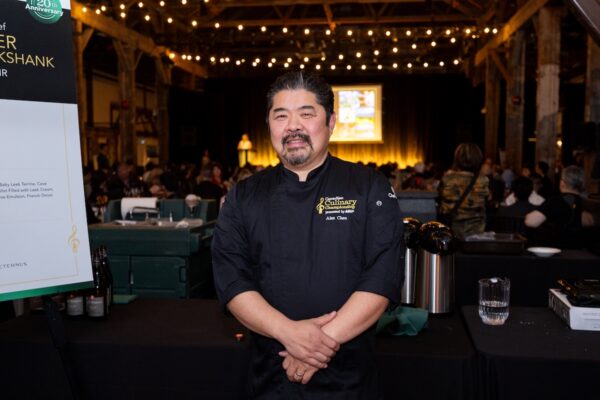
Last week, I had the pleasure of interviewing Chef Alex Chen of Boulevard Kitchen & Oyster
Bar in Vancouver and Wild Blue in Whistler at Canada’s Great Kitchen Party All-Star
Invitational in Vancouver. Named Vancouver’s Chef of Distinction, Chen will represent the city
at the Canadian Culinary Championship in Ottawa, January 29–30, 2027. After winning the
national championship in 2018, he returns to the competition in a mentoring role.
The Vancouver Invitational saw six accomplished chefs compete for the opportunity to join
Chen on Team Vancouver at the national finals. National judges select a Chef of Distinction to
pair with a regional All-Star winner. In Ottawa, teams will face three grueling challenges: the
Mystery Wine competition, the Black Box Challenge, and the Grand Finale. Judged blind by a
panel of chefs, authors and culinary experts, the competition tests creativity, technique and the
ability to perform under pressure, all in pursuit of the title of Canada’s Culinary Champion.
Having worked his way up through the restaurant industry since the age of 13, Alex brings a
wealth of experience to his role as a Chef of Distinction. While competition still excites him,
helping young chefs discover their potential is clearly one of the most rewarding parts of his
career.
Here’s what Chen had to say.
You’ve experienced competition as a competitor, and now you’re returning as a Chef of Distinction and mentor. Does it feel different this time around?
The end goal is always the same. Everybody who enters the competition has their eyes on the
finals. That’s the destination. This time is a little different because any competitor could be my
partner. In the past, I could choose my own sous-chef, but here, that element is out of my control.
You have to be ready to work with whoever you’re paired with.
What do you think makes a successful team in a competition like this?
You’re only as good as your partner. As a senior mentor, you also need to leave room for the
other person to evolve. You need to have each other’s backs, especially when the intensity is
high. Everyone has a different idea of what intensity means and how much practice is necessary,
so you need to be on the same page. It’s about complementing each other and allowing both
people to contribute to the dishes. It shouldn’t be just one person’s vision. Instead, you want to
create something with multiple layers, where both voices come through.
How important are Pacific Northwest ingredients when you’re creating your dishes?
We’re blessed with abundance. We’re a coastal region with pristine waters and beautiful, world-
class ingredients. Why wouldn’t you use what we have? For this round, it makes sense to
leverage those ingredients, but things change as the competition progresses. For the Mystery
Wine challenge in Ottawa, for example, you have a limited budget and can’t necessarily get theingredients you want. The Black Box Challenge is another matter entirely because you have no
control over what you’re given.
Were you looking to showcase Vancouver and what makes its food culture unique?
Yes, but both partners need to agree, and sometimes that needs to be strategic. Is it about terroir?
Is it about the unique ingredients? Or is it about simplicity?
Sometimes a dish can be incredibly simple, yet so confident and thought-provoking. You look at
it and think, Wow, this is so simple, but it works. You need to have a strong belief in what you’re
creating and a strong story behind it, and then once you truly believe in a dish, you need to
defend it.
The Black Box Challenge must be one of the most stressful parts of the competition. How do you prepare for the unexpected?
Between Boulevard and Wild Blue, under our house we’ve won it four times, but that doesn’t
make it any easier. I think it’s one of the hardest competitions because you’re always trying to
practice for something you can’t predict.
At one point, I was trying to crack the code. How could I practice and come up with a dish when
I didn’t know the ingredients? Eventually, I told my sous-chef to give me combinations that
made absolutely no sense. I wanted weird ingredients, things that would be difficult to put
together. The strategy became simple: it doesn’t matter what you’re given. You have to cook!
You’re going to have to rely on your skills—your knife skills, your technique, and your
experience. Trust them and make it work.
How do the skills you develop in competition translate to the restaurant kitchen?
There are so many parallels. You might have a menu planned, but suddenly someone has an
allergy, a VIP guest makes a special request, or you have 20 tables to serve at the same time
while a banquet is going on. You ask yourself. What do I have? How can I make it work?
Organization, hustle, and the ability to focus matter. For me, that environment creates a kind of
controlled chaos where the busier I am, the more focused I become. I couldn’t imagine sitting in
an office all day, working on spreadsheets, but when everything is happening at once in a
kitchen, I’m comfortable. You can see what’s happening, make quick decisions, and keep
moving. I think how your brain works and your personality help determine whether you’ve
chosen the right career, and if you have, it becomes your superpower.
You’ve moved from competing to mentoring others. What has that transition meant to you?
Mentorship has always been one of my greatest joys. I remember being an apprentice. My chef
saw something in me that I didn’t see in myself. I thought I was just lucky, but he saw potential
and believed I could achieve something greater. Now, I get to do that for other people. Youwatch an apprentice who doesn’t believe they have what it takes, and then, somewhere along the
way, something changes. They begin to think, I can actually do this. You see their confidence
grow, and you see them use the tools and knowledge you’ve given them. They take those lessons
with them for the rest of their lives and grow into the people they’re meant to become. For me,
mentoring the next generation is one of the most sustainable things we can do as chefs. We can
help develop people who will go on to build their own careers and mentor others.
You started working in kitchens at just 13 and worked your way up through the restaurant industry. What advice would you give to a young chef just starting?
It’s a different generation now. Everything is faster, and everything seems instant. When you
look at Instagram, sometimes what you see isn’t reality. A dish might look simple in a
photograph or a cookbook, but once you pick up a knife and start working with the ingredients,
you discover how much there is to learn.
It takes repetition, skill, and failure, and you must be willing to put in the work. You also need to
find a chef who genuinely wants to develop you. There’s a difference between someone who
challenges you because they want you to grow and someone who tries to stop you from growing.
Sometimes it’s difficult to tell the difference, particularly when you’re young. Have honest
conversations about expectations and intentions, then find someone who genuinely wants to help
you develop your skills and become a better chef.
Working for someone who genuinely wants to help you grow is a gift!
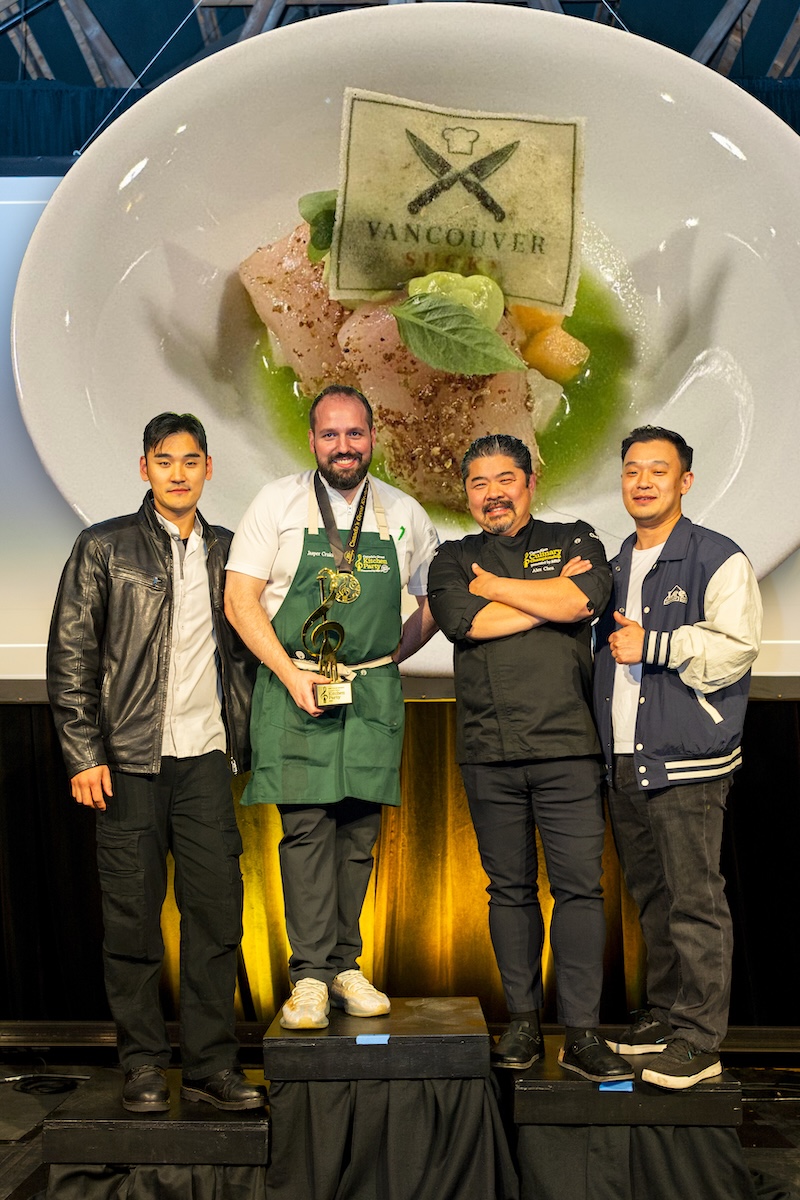
Congratulations to Chef Jasper Cruickshank of L’Abattoir, who will join Chef Alex Chen in
Ottawa next January. I look forward to following Team Vancouver’s journey to the Canadian
Culinary Championship!
