

Château Tertre Roteboeuf: History and Portfolio
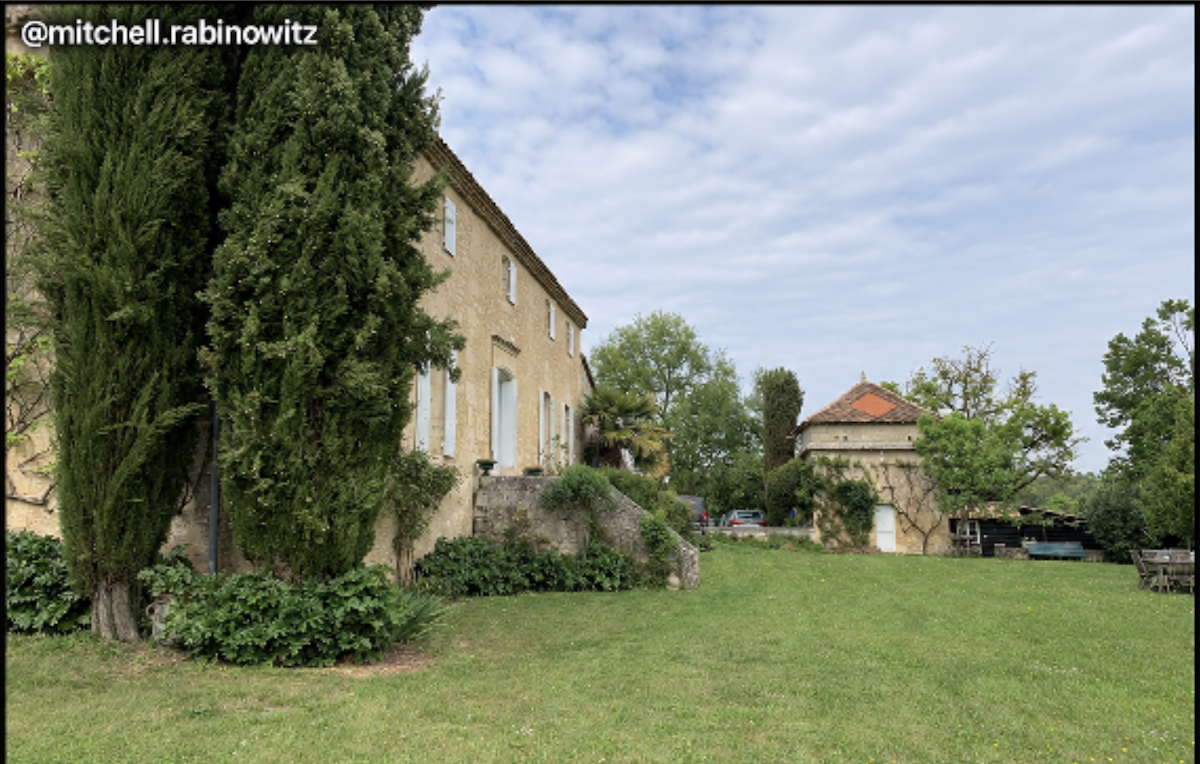
Tertre Roteboeuf occupies about six hectares two kilometers southeast of the town of Saint-Émilion, in the commune of Saint-Laurent-des-Combes. The vines descend from the family house in a south-facing curve on an extension of the slope associated with Château Pavie and Château Larcis Ducasse. From the upper ground, the land falls toward the plain of the Dordogne. This compact arrangement gives the estate its physical character: an eighteenth-century house, a steep vineyard immediately below it, and a small cellar beneath the place where the Mitjavile family lives. The scale is domestic by Bordeaux standards, yet the wine has circulated for decades among the most sought-after bottles of the Right Bank.
Miloute later told the wine writer Stuart Pigott that the house was built around 1730 as a hunting lodge. The vineyard was recorded in the 1929 edition of Féret, Bordeaux’s longstanding reference guide to wine properties, and was once known as Le Tertre, a common Bordeaux name derived from a word for a hillock or rise in the land, while Roteboeuf was added much later. The word is usually translated as “belching ox,” a reference to cattle that once grazed or worked on the warm lower slope. The family also associates the two parts of the name with the property itself: Tertre for the higher ground around the house and garden, and Roteboeuf for the slope below. Since the 1994 vintage, the label has omitted the word Château because François Mitjavile considered it too grand for a property that remained a family home and working vineyard.
The Gilard family owned both Le Tertre and the nearby Château Bellefont-Belcier. When Émile Gilard died in 1961, his daughter Émilie, known as Miloute and later the wife of François Mitjavile, inherited Le Tertre. She was still young, and the vineyard was leased to relatives at Bellefont-Belcier. Its grapes therefore lost their separate name within a larger production, while the cellar at Le Tertre stood unused. The land already possessed the same slope and clay-limestone soil that later brought it attention, but it did not yet operate as an independent estate.
Miloute and François Mitjavile were then living and working in Paris. François came from a family involved in transport and had no formal degree in viticulture or winemaking. When the couple decided to return to Saint-Émilion, he spent two years, from 1975 through 1977, learning at Château Figeac under Thierry Manoncourt. There he learned vineyard observation, blending, and the management of wine during barrel aging. François returned to Le Tertre after the 1977 harvest, the family recovered direct control of the vineyard, and he made the 1978 vintage under the new Tertre Roteboeuf name. Miloute restored the house and worked beside him as the estate developed.
The 1982 gained attention after it placed first in a blind tasting published in 1985 by Que Choisir?, a French consumer magazine. The 1985 vintage was the first to receive a substantial share of new oak, initially about half of the barrels, and the proportion rose during the following years. François later described 1989 as another decisive vintage because the vineyard, late harvest, warm fermentation, and long barrel aging had begun to work together with greater consistency. The estate’s reputation was therefore established before the small, heavily oaked Saint-Émilion wines of the 1990s were widely grouped under the term garage wine, which came to describe small-production Bordeaux estates known for concentrated wines made from ripe fruit and often raised in extensive new oak.
Tertre Roteboeuf has never entered the separate classification of Saint-Émilion. Its label carries Saint-Émilion Grand Cru, an appellation with stricter production rules than basic Saint-Émilion. Grand Cru Classé is a ranked status awarded through a different process to estates that apply for evaluation. François declined to submit the property, so descriptions that call Tertre Roteboeuf a Grand Cru Classé are inaccurate. Critics nevertheless place the wine alongside Saint-Émilion’s Premier Grand Cru Classé estates, although no result can be assumed for a classification process the property has never entered. The family also developed its market outside many of Bordeaux’s usual institutional channels, selling limited quantities through selected merchants and long-standing agents. Scarcity followed naturally from the vineyard’s size and an average annual production of about 25,000 bottles.
The vineyard’s concave, south-facing slope collects sunlight and is sheltered from some of the wind that reaches more exposed ground. Rich clay lies over limestone and warms slowly in spring while retaining water during dry weather, so the vines can continue ripening through a hot summer. The limestone beneath it permits drainage and keeps the rooting zone from remaining saturated after rain. Cold air can also move downhill toward the plain instead of settling around the vines, a benefit that protected the property during the severe frost of 2017. The warm exposure promotes ripening while the cool, moisture-retentive soil slows it, extending the period in which the grapes can ripen.
The current vineyard is planted to approximately 80 percent Merlot and 20 percent Cabernet Franc, with vines averaging about forty years of age. Merlot supplies most of the flesh, plum and cherry fruit, while Cabernet Franc contributes perfume, acidity, and firmer tannin. The vineyard is harvested by hand, and average yields are reported near 35 hectoliters per hectare, a standard measure of vineyard yield and a figure well below the maximum allowed by the appellation. François has generally avoided making crop reduction during summer a routine act. He prefers to establish an appropriate crop through pruning and early vineyard work, then preserve enough foliage to keep the fruit ripening steadily through the season.
The date of harvest receives unusual attention at Tertre Roteboeuf. François often waits after neighboring estates have begun picking because he wants the skins, seeds, pulp, and aromas to reach full maturity together. Sugar alone cannot determine that moment because a berry may contain enough sugar for a high level of alcohol while its tannins still taste dry or green. He sometimes uses the word degradation for the condition he seeks, meaning the first softening and aromatic development that occur at the edge of overripeness rather than rotten fruit. He wants grapes that have moved beyond simple fresh-fruit aromas while retaining acidity, sound skins, and the capacity to ferment cleanly.
Waiting carries real hazards because autumn rain can dilute berries or encourage fungal disease, Merlot can lose acidity, and sugar can rise faster than the remaining flavors improve. The decision therefore changes with the year. A cool season may require extra time, while a hot, dry season can force the family to distinguish useful maturity from dehydration. The site reduces some of these dangers because the clay supplies water and the slope receives abundant sun, yet no formula removes the need to taste the fruit repeatedly. Tertre Roteboeuf’s late harvest is a judgment renewed each vintage rather than a fixed calendar date.
The grapes ferment in concrete vats for roughly three to four weeks, with temperatures that can reach about 35 degrees Celsius. Fermentation converts grape sugar into alcohol, while maceration keeps the juice in contact with the skins so that color, tannin, and aroma enter the wine. Although 35 degrees Celsius is high for red-wine fermentation, the family handles the cap, the mass of grape skins that rises to the surface during fermentation, in a measured way so that color and tannin are extracted gently. Ripe tannins allow this longer, warmer contact without producing the hard dryness that would come from less mature seeds and skins. The method depends on the harvest decision; cellar heat cannot correct fruit picked before its tannins are ready.
The wine spends approximately 22 to 24 months in new, fine-grained French oak made by Tonnellerie Radoux, usually with a medium to long toast, a reference to how intensely the inside of the barrel is heated during its manufacture. New oak contributes spice, smoke, and tannin when the wine is young, but François uses it primarily as a controlled source of oxygen during a long period of maturation because small amounts of air pass through the wood. The cellar is warmer than most Bordeaux barrel rooms, held near 16 to 17 degrees Celsius in winter and allowed to reach about 20 degrees in summer. The wine is racked several times, meaning that it is moved from one barrel to another to leave sediment behind and admit a measured amount of air. Fining, which uses a binding agent to remove suspended particles, and filtration are decided according to the vintage rather than imposed as an identical recipe.
This exposure to oxygen begins some of the changes that many producers postpone until the bottle has been in a cellar for years. Fruit aromas become less primary as oak aromas become more fully integrated. The color begins to move from purple toward garnet, and tannins soften. The procedure can ruin a weak or poorly protected wine, so its success depends on ripe fruit, careful racking, and constant tasting. François argues that a wine bottled after this long preparation is more stable because it has already passed through a demanding period of maturation. Mature bottles support part of that claim: their color and aromas may appear advanced while the palate retains fruit, acidity, and persistence.
Tertre Roteboeuf produces no second wine. Many Bordeaux estates select their strongest vats for the grand vin and divert the remainder to a less expensive label. Here, the acceptable crop is determined in the vineyard and the harvested parcels are brought back together as the wine is pressed, racked, and raised. The practice limits the producer’s ability to polish the main label by removing every less imposing component. It also allows a difficult year to remain recognizable. The annual differences are substantial: a warm vintage may bring black plum, fig, dark cherry, cocoa, and roasted spice, while a cooler year can emphasize red cherry, herbs, flowers, and a more evident line of acidity.
The finished wine is usually broad in aroma and supple in texture, with ripe fruit, fine tannin, and savory flavors that become more pronounced with age. Coffee, toast, and sweet spice can be conspicuous during youth because every vintage sees new oak. With time, those flavors can join dried cherry, tobacco, earth, mushroom, and grilled meat. The wine can give considerable pleasure early because its tannins are ripe and its barrel aging is long, yet well-stored bottles from the 1980s, 1990s, and later decades have shown that early accessibility does not preclude extended aging. Vintage, storage, and cork condition remain decisive because production is small and replacement bottles are expensive.
François expanded beyond Saint-Émilion in 1988 when he acquired Roc de Cambes in the Côtes de Bourg, near Bourg on the right bank of the Gironde north of Bordeaux. He was attracted by another concave, south-facing slope of clay and limestone, this time on the well-regarded Les Croûtes hillside above the river. The property comprises approximately twelve to fourteen hectares, more than twice the size of Tertre Roteboeuf. The estuary moderates temperature, while the slope and clay allow the family to pursue slow ripening and a late harvest. François applied the same basic sequence of manual picking, concrete fermentation, and extended barrel aging, although the proportion of new oak and the precise duration can vary by vintage.
Recent accounts describe Roc de Cambes as approximately 80 percent Merlot and 20 percent Cabernet Sauvignon. Older descriptions also list small amounts of Cabernet Franc and Malbec, vines that have since been reduced or removed. Cabernet Sauvignon ripens later than Merlot and responds to the warmer upper slope, giving the wine darker fruit, firmer tannin, and a more direct savory character than Tertre Roteboeuf. Roc de Cambes is a separate first wine of its Côtes de Bourg vineyard. It should not be described as a second wine of Tertre Roteboeuf, even though the two estates share ownership and cellar practices.
Domaine de Cambes comes from different land at the same Côtes de Bourg property. These lower parcels lie close to the Gironde, below the slope used for Roc de Cambes, and contain more clay and less limestone. Because they fall outside the Côtes de Bourg boundary used for the upper wine, Domaine de Cambes is sold under the broader Bordeaux appellation. Plantings are commonly given as roughly 55 percent Merlot, 40 percent Cabernet Franc, and 5 percent Malbec. It is frequently called Roc de Cambes’s second wine, but the distinction is geographic: the grapes come from a separate portion of the property with its own soil, grape mix, and appellation.
François and Miloute’s son Louis, known as Loulou, developed another family property with his wife Caroline. After working with his father and consulting in several countries, Louis and Caroline acquired a property formerly called Château Cadet in Saint-Genès-de-Castillon in 2007. The property became Domaine de l’Aurage, and they produced their first vintage that year. The estate covers about twenty hectares, with approximately eighteen hectares planted in one block on clay-limestone slopes within Castillon Côtes de Bordeaux, immediately east of Saint-Émilion. The vineyard is now about 95 percent Merlot and 5 percent Cabernet Franc, and replanting has gradually favoured Merlot.
L’Aurage belongs to Louis and Caroline rather than to Tertre Roteboeuf, but it is reasonably included in the wider Mitjavile family portfolio. Its wines follow the family preference for full ripeness, concrete or barrel vinification according to the lot, and a substantial period in French oak. The larger vineyard and the cooler position in Castillon give Louis different material to work with, so L’Aurage is more than an extension of his father’s wine. Its scale allows broader availability, while its dense Merlot fruit and long maturation reveal where his training began.
Miloute helped recover the original property, restored the house, and participated in the estate from its first independent vintages. Their daughter Nina has worked for more than a decade across Tertre Roteboeuf and Roc de Cambes and has assumed increasing responsibility, while François remains closely involved. Louis runs L’Aurage with Caroline and continues to contribute to the family’s work.
Mitchell Rabinowitz
I’m a retired university professor with a Ph.D. in cognitive and developmental psychology. I taught cognition and education starting in 1984. In retirement I decided to take wine seriously, and I’ve been using AI to help me learn faster and create better. I’ve also learned you can’t just ask AI one question and call it done.
For me, an essay usually takes a number of iterations. I create a draft, then I check accuracy, hunt for gaps, revise the structure, and do it again until the piece feels coherent and useful. I also use other AIs as collaborators. It is an extensive process creating the essays.
I try to create these as stories because that is the format that sticks for most of us. Facts land better when they have a sequence and a few turning points. Connect with @mitchell.rabinowitz on Instagram
